An eligible LLC can obtain a DSCR loan for a rental property when the entity, required personal guarantors, property cash flow, collateral, funds, and transaction satisfy the lender’s current program. The LLC may own the property and sign as the borrower, while designated owners or managers generally provide personal guarantees.
theLender offers LLC-eligible DSCR loans for qualifying long-term rentals, short-term rentals, multifamily properties, and investor portfolios. Send theLender your LLC-owned rental scenario for a review of the entity structure, guarantors, property, and requested loan terms.
LLC Eligibility for a DSCR Loan
An eligible LLC can obtain a DSCR loan for a rental property under programs that permit entity vesting. The lender qualifies the property through approved rental income and reviews the LLC’s formation, ownership, authority, assets, and required individual guarantors.
The LLC may appear as the borrower and vested property owner in the loan and title documents. Required individuals generally sign personal guarantees and complete credit, housing-history, identity, background, and liquidity reviews. Underwriting covers both the entity and the people who own or control it.
The intended ownership structure should be established before the purchase contract and loan application are completed. The contract, application, entity records, bank accounts, title, appraisal instructions, and insurance should use the same exact legal name. Legal and tax advisors should evaluate the entity’s liability, tax, ownership, and estate-planning consequences.
How Lenders Qualify an LLC for a DSCR Loan
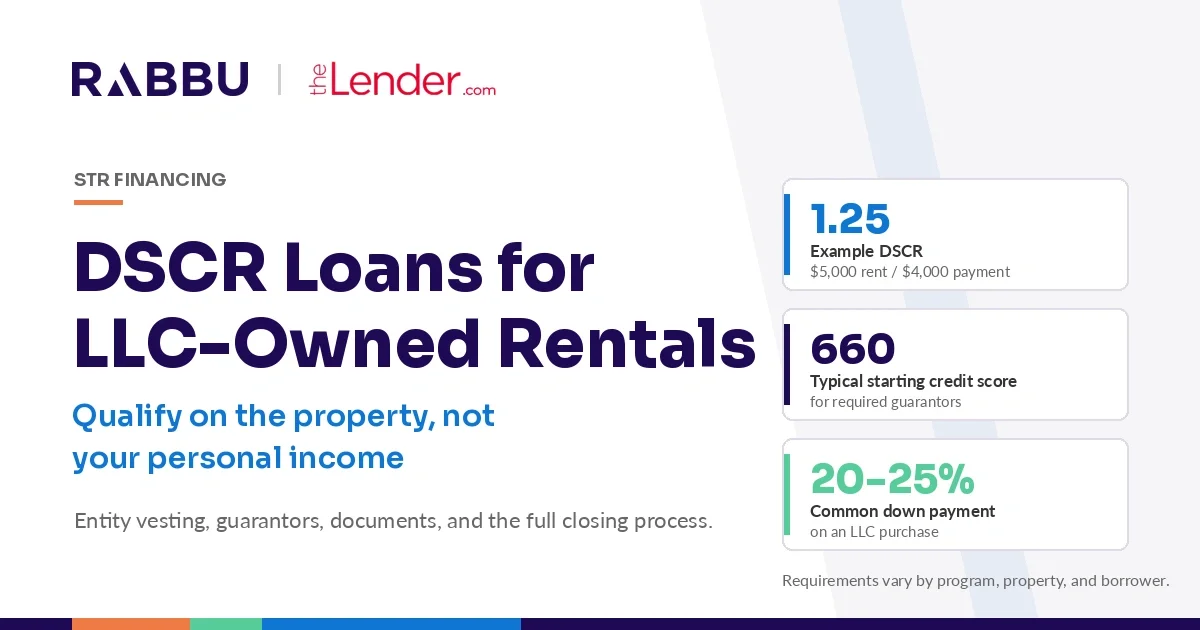
Lenders qualify an LLC DSCR loan by dividing eligible property rent by the complete qualifying property payment and then underwriting the entity, guarantors, collateral, funds, and transaction. A property with $5,000 in eligible monthly rent and a $4,000 qualifying payment has a DSCR of 1.25.
The payment generally includes principal, interest, property taxes, insurance, and applicable HOA dues. Long-term rental income may be supported by a lease and appraisal rent schedule. Short-term rental income may be supported by approved operating history, seasonal analysis, or market data. The program determines the documents and calculation used for final qualifying rent.
An LLC DSCR review also covers:
-
Guarantor credit: Credit scores, mortgage or rental history, significant credit events, experience, and background information.
-
Entity authority: Formation, active status, ownership percentages, managers, voting rights, and authority to borrow and pledge the property.
-
Cash requirements: Documented down payment or equity, closing costs, required reserves, and the source of funds.
-
Collateral: Appraised value, condition, marketability, title, liens, insurance, and legal rental use.
-
Transaction details: Purchase or refinance purpose, requested loan amount, vesting, property history, and intended occupancy.
Many programs begin around a 660 credit score and commonly require 20% to 25% down on a purchase. Exact credit, leverage, DSCR, and reserve requirements vary with the property, loan amount, experience, and current program.
Personal Guarantee Requirements for an LLC DSCR Loan
Most LLC DSCR loans require personal guarantees from designated individual owners or managers. The guarantee creates personal obligations under the loan documents even when the LLC owns the property and signs as the borrower.
The lender uses the operating agreement and ownership schedule to identify controlling parties and determine who must apply and guarantee. Ownership percentage thresholds and required guarantors vary by program. Each required person may need to provide identification, authorize credit, document housing history, disclose real estate experience, and verify liquidity.
Members should understand who can bind the entity, who guarantees the debt, and how the operating agreement allocates authority among partners. Qualified legal counsel should review the guarantee and organizational documents before signing.
Documents Required for an LLC DSCR Loan
An LLC DSCR loan requires documents that establish the entity’s legal existence, ownership, management, tax identification, borrowing authority, and assets. The lender also requires borrower, property, rental-income, title, appraisal, and insurance documents for the transaction.
The entity file commonly includes:
-
Articles or certificate of organization: Evidence that the LLC was formed in the applicable jurisdiction.
-
Operating agreement: The ownership, managers, voting rights, transfer provisions, and authority to borrow.
-
EIN confirmation: The entity’s federal tax identification record.
-
Certificate of good standing: Evidence of active status when required by the program or closing agent.
-
Ownership schedule: Every member, ownership percentage, and controlling party.
-
Borrowing resolution: Formal approval of the loan and authorized signers when the operating agreement or closing agent requires it.
-
Entity bank statements: Evidence of assets, reserves, and movement of closing funds held by the LLC.
-
Guarantor documents: Identification, credit authorization, housing history, asset records, and required explanations.
The property and transaction file can include the purchase contract or payoff statement, appraisal, lease or rental-income support, title report, insurance binder, HOA or condominium records, and source-of-funds documentation. Names, addresses, ownership percentages, and signer titles must remain consistent across every document.
Down Payment, Reserve, and Banking Requirements for an LLC
An LLC DSCR purchase commonly requires 20% to 25% down plus closing costs and reserves. The final requirement depends on guarantor credit, DSCR, property type, loan amount, experience, and program. Refinances use leverage limits based on appraised value, payoff, seasoning, loan purpose, and requested proceeds.
Closing funds may be permitted from entity accounts, guarantor accounts, or approved transfers between them, depending on the program. The lender must trace the source and ownership of deposits. Complete statements and transfer confirmations should connect the original account to the closing account without unexplained cash movement.
Required reserves are often measured as several months of the full property payment. Investors should maintain separate operating liquidity for repairs, vacancy, utilities, furnishing, management, and seasonal changes. Clean accounting also makes future refinancing and portfolio review easier to document.
Don't Let Financing Kill Your Deal
Most banks don't understand short-term rentals. These lenders do.
LLC DSCR Loans vs. Conventional Investment Loans
LLC DSCR loans can close directly in an eligible entity and qualify primarily through property rent. Conventional investment mortgages generally qualify individual borrowers through personal income, debts, assets, and agency rules and usually follow individual vesting requirements at closing.
-
Borrower: The eligible LLC can be the named DSCR borrower. Conventional agency borrowers are generally individuals.
-
Income: DSCR qualification uses approved property rent and the qualifying payment. Conventional qualification uses personal income and debt-to-income analysis.
-
Guarantee: Required individuals commonly guarantee LLC DSCR debt. Conventional borrowers sign the note directly as individuals.
-
Tax returns: Personal tax returns are generally unnecessary for standard DSCR income qualification. Conventional loans commonly require personal-income documentation.
-
Loan terms: DSCR loans use business-purpose investor pricing and may include prepayment provisions. Conventional loans follow agency pricing and rules.
A later transfer of a conventionally financed property into an LLC can affect servicing, title, insurance, refinance eligibility, and loan obligations. Investors should choose the financing and vesting plan together and obtain lender and professional guidance before transferring an encumbered property.
Step-By-Step LLC DSCR Process
The six steps in an LLC DSCR process are selecting the ownership structure, completing entity documents, using the exact legal name, documenting funds, insuring the vested owner and rental use, and signing in the correct capacities.
-
Select the ownership structure. Coordinate with legal and tax advisors and confirm that the lender’s program permits the proposed entity before writing the offer.
-
Complete the entity documents. Prepare the operating agreement, EIN, ownership records, active registration, and clear authority to borrow.
-
Use the exact legal name. Keep the purchase contract, application, title, appraisal, insurance, and bank records consistent. Disclose any proposed assignment or buyer change.
-
Document the source of funds. Confirm which personal or entity accounts may provide closing funds and preserve statements and transfer records for the entire path.
-
Insure the owner and rental use. The policy should name the correct vested owner, satisfy lender requirements, and cover the actual long-term or short-term rental strategy.
-
Sign in the correct capacities. A principal may sign entity documents as an authorized representative and guarantee documents individually. Follow the approved resolution and closing instructions.
theLender offers DSCR financing for eligible long-term rentals, short-term rentals, multifamily properties, and portfolios held in approved entities. Investors can review theLender’s LLC-eligible DSCR loan options and submit the property, ownership structure, guarantors, requested loan amount, and rental strategy for review.
Common LLC DSCR Loan Mistakes
Common LLC DSCR mistakes create conflicts between the entity, property, money, and closing documents. Resolving those conflicts during underwriting can require amended agreements, new title work, revised insurance, additional statements, or a different loan structure.
-
Creating the LLC after underwriting begins: Late formation can require revised application, title, appraisal, insurance, and compliance documents.
-
Using an incomplete operating agreement: The document should identify owners, managers, voting rights, and borrowing authority.
-
Missing required guarantors: Identify every owner and controlling person so the lender can determine who must apply and sign.
-
Mixing funds without records: Keep account statements and transfer confirmations that trace every deposit used for closing or reserves.
-
Using inconsistent legal names: Match punctuation, entity suffix, state of formation, and signer titles across the entire file.
-
Changing ownership near closing: Membership or vesting changes can alter program eligibility and require new underwriting and closing documents.
-
Planning personal occupancy: Standard DSCR financing requires investment use, regardless of whether an LLC owns the property.
Investors should send entity changes, new partners, major fund transfers, and revised rental plans to the lender before executing them. Early review keeps the loan, title, insurance, and entity records aligned.
LLC DSCR Loan FAQs
These answers cover common questions about DSCR loans for LLC-owned rentals. The specific entity, owners, property, and state determine the final requirements.
Can an LLC Get a DSCR Loan?
Yes. Eligible LLCs can borrow under DSCR programs that permit entity vesting. The lender reviews the entity, required guarantors, property cash flow, collateral, assets, and transaction.
What Credit Score Is Required for an LLC DSCR Loan?
Many programs begin around a 660 score for required personal guarantors. Lower or higher minimums can apply based on leverage, property, experience, loan amount, and program.
Does an LLC DSCR Loan Require a Personal Guarantee?
Usually, yes. Most programs require designated owners or managers to guarantee the debt individually. The operating agreement and ownership schedule help determine the required guarantors.
Can a Newly Formed LLC Get a DSCR Loan?
Yes. A newly formed LLC may qualify when its formation, ownership, authority, guarantors, assets, property, and transaction satisfy the program. Disclose the formation date at application.
Can Multiple Partners Use One LLC for a DSCR Loan?
Yes. The lender reviews every owner, ownership percentage, manager, authorized signer, required guarantor, and source of funds. The operating agreement must clearly describe authority and control.
Can an LLC Get a DSCR Loan for an Airbnb?
Yes. An eligible LLC-owned Airbnb may qualify when the address permits STR use and the income support, appraisal, insurance, guarantors, and transaction satisfy the program. theLender offers short-term rental loans for eligible properties.