Short-term rental properties can generate double or triple the income of traditional long-term rentals—but they can also drain your bank account through hidden costs, regulatory surprises, and income volatility that catches first-time investors off guard. The difference between profitable Airbnb investing and financial disappointment comes down to accurate market analysis, comprehensive expense modeling, and choosing properties where the numbers actually work.
If you’ve ever wondered whether buying an Airbnb property is a good investment, you're in the right place. This guide breaks down real STR profitability across different markets, compares actual returns against long-term rentals, reveals the true operating costs most investors miss, and shows you how to analyze deals using data instead of optimistic guesswork.
How Airbnb Investing Works
An Airbnb can be a good investment with higher earning potential than traditional long-term rentals, but success depends heavily on location, market demand, and local regulations. Profitability isn't guaranteed—fluctuating income and increased operating costs for cleaning, maintenance, and furnishing create risks that many first-time investors underestimate.
Short-term rental (STR) investing means buying property to rent by the night on platforms like Airbnb and VRBO rather than leasing to long-term tenants. Your revenue comes from nightly bookings—your average daily rate multiplied by your occupancy rate, minus all operating expenses. Unlike traditional rentals where a tenant pays $2,000 monthly for 12 months, STR properties might generate $150 per night but only book 18 nights per month, creating both higher income potential and greater volatility.
The business model requires managing listings across booking platforms, responding to guest inquiries within hours, coordinating professional cleaning between each stay, maintaining guest reviews, and adjusting pricing based on demand.
Why Airbnb Investing Used to Be So Challenging
Part of the challenge of Airbnb investing was the fragmented nature of data used to analyze potential investment opportunities. Traditional real estate platforms don't show whether a property will perform as an Airbnb, and most agents and lenders don't understand the STR market.
The Old Way: Investors hunted across multiple platforms—Zillow for properties, AirDNA for market data, spreadsheets for financial modeling—with fragmented information and guesswork on profitability. Manual research on zoning, occupancy patterns, financing options, and revenue projections took weeks and still left you guessing.
The New Way: Rabbu integrates market data, property listings, revenue projections, and STR-specialized financing in one platform. You can find turnkey Airbnb listings, analyze any property's income potential using actual comparable data, connect with agents who understand local STR ordinances, and access lenders who qualify you based on projected cash flow rather than just W-2 income.
Find the Right Airbnb Investment Property
Search exclusive listings for both turnkey and potential Airbnb properties in one place.
Explore Airbnbs for SaleAirbnb Returns vs Long-Term Renting
Short-term rentals can generate significantly more income than long-term leases, especially in tourist-heavy areas. A property that rents long-term for $2,200 monthly might generate $4,800 monthly as an STR in a high-demand market—more than double the revenue.
However, that STR income fluctuates with seasons, local events, and economic conditions, while the long-term tenant provides predictable monthly rent. STR income swings from $7,200 in July to $2,400 in February, requiring cash reserves to cover low-season shortfalls and sophisticated pricing strategies to maximize high-season revenue.
Key differences between STR and long-term rental income:
-
Revenue per square foot: A 1,200 sq ft beach condo might earn $26,400 annually as a long-term rental versus $57,600 annually as an STR in peak markets
-
Cash flow stability: Long-term rentals provide the same amount on the first of each month, while STR income varies dramatically month to month
-
Risk diversification: STR properties spread risk across dozens of guests annually, while long-term rentals concentrate all risk in a single tenant who might default
-
Management intensity: STR properties require constant turnover coordination, guest communications, and cleaning management that long-term landlords never face
Use Rabbu's Market Finder to identify markets where STR premiums over long-term rentals justify the additional complexity and costs. Sort by ROI score to find cities where the income advantage outweighs the operational burden.
True Costs and Fees That Shrink Profit
Many first-time investors underestimate STR expenses by 30-50%, leading to negative cash flow surprises within months of launching. While traditional rentals might cost 35-40% of gross rent in expenses, STR properties often consume 50-65% of gross revenue in operating costs.
Furnishing and Setup
Initial investment in furniture, decor, appliances, kitchenware, linens, and guest amenities typically runs $15,000-$35,000 for a 2-3 bedroom property. You're creating a hotel-quality experience with comfortable beds, quality linens, fully stocked kitchens, streaming services, and thoughtful touches that generate five-star reviews.
Ongoing replacement costs from guest wear and tear add $2,000-$4,000 annually. Furniture degrades faster with weekly turnover than with a single family living there for years.
Properties tagged as “Active Airbnb” on Rabbu's marketplace come fully furnished, eliminating this $15,000-$35,000 upfront cost and months of setup time. You're buying a cash-flowing business, not a renovation project.
Cleaning Restocking and Utilities
Professional cleaning between each guest runs $80-$150 per turnover depending on property size and location. A property with 15 bookings monthly pays $1,200-$2,250 just for cleaning—far exceeding the $0 cleaning cost of a long-term rental.
Restocking toiletries, paper goods, coffee, tea, and consumables costs $100-$200 monthly. Guests expect hotel-like amenities—shampoo, conditioner, body wash, toilet paper, paper towels, trash bags, dish soap, and coffee.
Higher utility bills from frequent use and HVAC cycling often double what you'd pay with long-term tenants. Guests leave lights on, run air conditioning at 68 degrees, and use more electricity than residents who pay their own utility bills. Budget $200-$400 monthly for utilities in a 2-3 bedroom property versus $100-$150 for long-term rentals where tenants pay their own.
Airbnb Host Fees and OTA Charges
Platform commission fees take 3% of each booking when guests pay the service fee, or 14-16% when you choose to pay the fee to attract more bookings. A property generating $60,000 annually pays $1,800-$9,600 in platform fees alone.
Listing fees across multiple booking sites—Airbnb, VRBO, Booking.com—and channel manager software to sync calendars cost $30-$100 monthly. Professional property management software with automated messaging, dynamic pricing, and review management adds another $20-$50 monthly.
STR Insurance and Local Taxes
Specialized STR insurance requirements exceed homeowners or landlord policies by $1,000-$2,500 annually. Standard policies exclude short-term rental activity, requiring specific STR coverage that protects against guest injuries, property damage from frequent turnover, and liability claims.
Local occupancy taxes, lodging taxes, business licenses, and permitting fees vary dramatically by jurisdiction. Some cities charge 10-14% occupancy tax on gross bookings, others require annual business licenses costing $500-$2,000, and many demand permit fees of $200-$1,000 per year.
Rabbu's STR-specialized agents can help verify permit compliance and regulatory requirements before purchase, preventing costly surprises after closing when you discover your city requires permits that take 6 months to obtain.
Turnover Labor or Management Software
Time cost of managing bookings, messaging guests at all hours, responding to maintenance issues, coordinating cleaners, and managing reviews often equals 10-15 hours weekly for self-managed properties. Property management companies charge 20-30% of gross revenue to handle all operations, typically $1,000-$1,800 monthly for a property generating $6,000 in bookings.
Automation software for messaging, pricing, and channel management costs $50-$150 monthly if you self-manage but want to reduce manual work.
The Best STR Deals Never Hit Zillow
Browse exclusive listings for turnkey Airbnbs with actual income data.
Search Exclusive ListingsPros and Cons of Owning an Airbnb
Higher Nightly Rates and Tax Benefits
Dynamic pricing based on demand, events, and seasonality allows you to charge $250 per night during peak summer weekends and $95 on winter weekdays. Major events—concerts, festivals, conferences, sporting events—create pricing spikes where nightly rates triple, generating outsized returns during 5-10 key weekends annually.
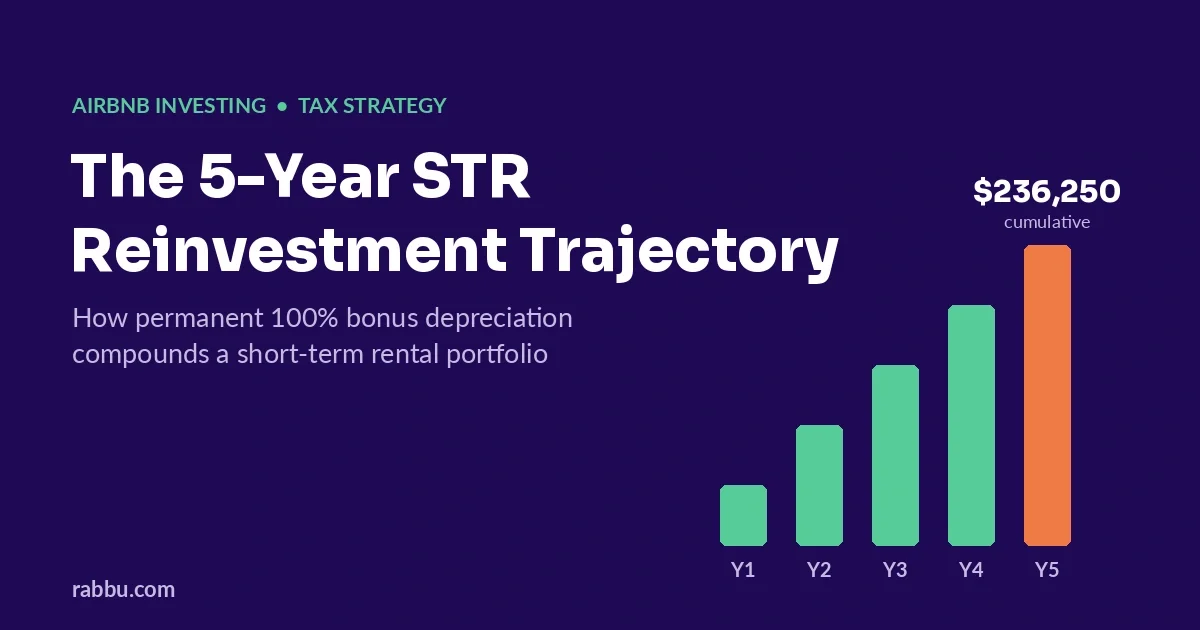
Tax deductions for legitimate business expenses including mortgage interest, property taxes, insurance, utilities, supplies, depreciation, and travel to the property can significantly reduce taxable income. Cost segregation studies accelerate depreciation on furniture, appliances, and improvements, creating paper losses that offset other income.
Regulatory and Seasonality Risks
Local laws can change quickly and restrict or ban STRs through new ordinances limiting rental days, requiring expensive permits, or prohibiting non-owner-occupied STRs entirely. Cities like New York, San Francisco, and Santa Monica have implemented strict regulations that decimated STR markets, leaving investors with properties that can't legally operate as planned.
Income volatility from off-seasons, macroeconomic shifts, and increased competition creates cash flow uncertainty that long-term rentals avoid. A property earning $7,000 monthly in summer might generate $2,500 in winter, requiring substantial cash reserves to cover mortgage payments during slow periods.
Active Management Requirements
Guest communication creates 24/7 expectations that traditional landlords never face. Guests message at 11 PM about Wi-Fi passwords, call at 6 AM about coffee makers, and text during your vacation about thermostat settings. Response time directly impacts your search ranking and booking conversion—delays of more than an hour hurt your visibility and revenue.
Higher maintenance frequency due to turnover and heavy use means you're fixing things constantly. Door locks break from 100+ entries per year instead of daily use by one family. What would be annual maintenance on a long-term rental becomes quarterly or monthly intervention on an STR property.
Diversification and Exit Flexibility
Multiple guests diversify income versus a single tenant's default risk. If one guest cancels, you have 20+ other bookings that month. Traditional rentals concentrate all risk in one tenant—if they stop paying, your income drops to zero while eviction proceedings drag on for months.
You can block two weeks for family vacation without breaking a lease. If STR regulations change or you tire of management intensity, you can pivot to long-term rental without selling. This flexibility has real option value that single-strategy properties lack.
How Profitable Are Airbnbs in Different Markets?
Profitability is highly location-dependent—success hinges on market demand, regulations, and tourism or business travel drivers. A property in Gatlinburg, Tennessee might generate 18% cash-on-cash returns while an identical property in a saturated urban market barely breaks even.
Use Rabbu's Market Finder to compare ROI scores, occupancy rates, and gross yields across 500+ markets. Sort by highest ROI to identify cities where the combination of property prices, rental income, and operating costs create optimal returns. Here’s how to search for profitable markets using Rabbu’s Market Finder:
-
Look for markets with 20+ active Airbnbs — these show healthy demand.
-
Compare 5–10 markets, focusing on:
-
ROI score: higher = stronger returns.
-
Occupancy: consistent demand.
-
Gross Yield: revenue relative to property value.
-
-
Narrow to your top 2–3 markets for deeper analysis.
-
View market maps, seasonality, and top Airbnbs.
-
Explore Airbnbs for Sale directly from this view.
-
High-Occupancy Urban Hubs
Business travel, conventions, hospitals, and year-round demand create consistent bookings in cities like Nashville, Austin, and Denver. Corporate travelers book Monday through Thursday at $180-$250 per night, while leisure travelers fill weekends at similar rates. Annual occupancy rates of 70-85% provide predictable cash flow with minimal seasonal volatility.
Higher property prices and stricter regulations offset some income advantages. A condo that costs $450,000 in Nashville might generate the same cash flow as a $280,000 house in a secondary market, resulting in lower ROI despite higher absolute income.
Seasonal Vacation Destinations
Beach, ski, and lake markets with peak-season rates generate extraordinary returns during 12-16 weeks annually. A beach house might command $400-$600 nightly in summer, earning $35,000-$50,000 during June through August alone.
That same beach house might book only 6 nights monthly at $150 per night during winter, generating $900 while expenses continue at $3,500 monthly. Properties need to earn 70-80% of annual revenue during 4-5 peak months to achieve positive annual cash flow.
Emerging Drive-To Markets
Secondary cities near major metros—Asheville, Chattanooga, Fredericksburg, Bend—with growing demand and lower entry costs offer compelling risk-adjusted returns. Properties cost $300,000-$450,000 versus $500,000-$800,000 in primary markets, while generating 60-75% of the income.
Guests drive 2-4 hours from major cities for long weekends, creating consistent Friday-Sunday demand. Remote workers book week-long stays to escape city apartments, filling traditional off-peak periods.
Regulation-Friendly Cash Flow Cities
Clear STR ordinances, practical permit processes, and supportive local policies reduce regulatory risk and operational friction. Markets like Scottsdale, Fort Myers, and Myrtle Beach welcome STR investment with straightforward licensing, reasonable taxes, and stable rules that won't change overnight.
You might earn 14% cash-on-cash return in a regulation-friendly market versus 18% in a regulatory gray area—but the 14% return comes with confidence you can operate legally for years.
Turnkey vs. Conversion: Choosing Your Investment Strategy
The Old Way: Investors had to guess whether to buy turnkey or convert properties without clear data on market performance or setup costs—nor was there a reliable way to source turnkey Airbnb properties even if you wanted one. You'd find a property on Zillow, manually research comparable STR performance on Airbnb, build rough projections in spreadsheets, and hope your assumptions proved accurate.
The New Way: Rabbu's marketplace clearly categorizes “Active Airbnbs” (turnkey) and “Airbnb Potential” properties. Properties designated with an “Actual Financials” tag report the last 12-months of historical operating income as inputted by the seller or listing agent. And all properties without the “Actual Financials” tag project revenue and returns based on actual market data.
Benefits of Buying a Turnkey Airbnb
-
Immediate cash flow: Start earning income as soon as ownership transfers, often within days of closing
-
Verified performance data: Analyze actual historical revenue instead of projections based on comparable properties
-
Easier financing: Income history strengthens DSCR loan applications, often resulting in 0.25-0.50% lower interest rates
-
Less time investment: Fully furnished and often managed by existing teams who can continue operations under new ownership
-
Proven ROI: Calculate accurate cap rate and cash-on-cash returns with existing financials rather than hopeful projections
Tradeoffs with Turnkey Properties
Pay premium for convenience and existing cash flow, typically 15-30% above comparable properties without STR income. A house worth $320,000 as a primary residence might sell for $380,000-$415,000 as a turnkey STR.
Design and branding decisions already made by the previous owner. If you have strong opinions about interior design, guest experience, or operational systems, inheriting someone else's choices feels constraining.
Benefits of Converting a Home into an Airbnb
-
Lower entry cost: Avoid premium pricing of turnkey properties by buying standard homes at market rates
-
Higher ROI potential: Control costs and create equity through improvements that boost nightly rates and occupancy
-
Creative control: Design unique guest experience and brand differentiation that sets your property apart
-
Tax advantages: Depreciate furnishings and improvements for better tax benefits in year one
-
Forced appreciation: Add value through strategic renovations and STR conversion that increases property worth beyond purchase price
Tradeoffs with Conversion Properties
Months of preparation before first booking means negative cash flow while you furnish, photograph, list, and optimize the property. You're paying mortgage, insurance, and utilities for 2-4 months with zero revenue.
Your first 10-15 bookings might generate mediocre reviews while you refine your approach, affecting search ranking and future bookings. Qualify based on personal income, not projected STR revenue, since the property has no operating history.
Find the Right Airbnb Investment Property
Search exclusive listings for both turnkey and potential Airbnb properties in one place.
Explore Airbnbs for SaleFive Steps to Find and Analyze an Airbnb Deal Accurately Using Rabbu
The Old Way: Investors cobbled together data from multiple sources—AirDNA for market data ($50-$100 monthly subscription), Zillow for property listings, spreadsheets for financial modeling, phone calls to local agents for zoning information. Building projections for a single property took 4-8 hours of research.
The New Way: Use Rabbu's integrated platform for active STR listings, data-driven deal analysis with verified comps and projections, completing the same analysis in minutes with higher accuracy.
Step 1. Identify Top Markets with Rabbu's Market Finder
Visit Rabbu’s Market Finder and sort markets by ROI score (a proprietary metric calculated by Rabbu that indicates how suitable a specific geographic market is for purchasing properties to list as a short-term rental) from highest to lowest and look for cities with 20+ active Airbnbs to ensure adequate comparable data. Compare occupancy rates across markets—70%+ indicates strong demand, while 50-60% suggests oversupply or weak fundamentals.
Examine gross yields and seasonality patterns to understand income stability. Markets with 8-10% gross yields and relatively flat monthly occupancy provide stable cash flow, while 12-15% gross yield markets with extreme seasonality require larger cash reserves but offer higher absolute returns.
Step 2. Browse High-Performing Properties in Rabbu's Marketplace
As a reminder, the Rabbu marketplace has lots of different types of Airbnbs for sale—we recommend using filters to narrow down your search. Here’s instructions on how to browse effectively:
-
Navigate to the Rabbu Marketplace
-
Select your chosen markets,
-
If you’re looking for a turnkey Airbnb, then click All Filters → Tags → Active Airbnb.
-
Active Airbnb = verified Airbnb listings with actual performance history.
-
Actual Financials = actual historical financials inputted by the seller or listing agent
-
-
Set price filters (typically >$300K) based on market norms.
-
Add filters for property type and bedroom count
-
Sort by Gross Yield, and filter results to 5–30% yield range.
-
If you’re looking for a property with STR potential, add tags for Airbnb Potential, Former Airbnb and Agent Pick.
-
If too few results:
-
Still low? Include Public Listings (less vetted, but higher volume).
-
-
To stay updated, click Save Search → set up email alerts for new matching properties.
-
Note that you must have a Rabbu account to save a search (it’s free)
-
-
When you find a property you like, click Contact Agent to inquire
Step 3. Calculate Revenue with Rabbu's Airbnb Calculator
Enter property address into Rabbu’s free Airbnb calculator and refine comp set to include only properties with 5+ reviews and 4.9+ ratings. Match amenities carefully—pool, hot tub, sauna, game room—to target property specifications since features dramatically impact nightly rates and occupancy.
Aim for 5-10 comparable listings within 2-3 miles of the subject property. Toggle between 75th and 90th percentile performance to see top-performer potential if you execute well, not just median market performance.
Step 4. Model Financing Scenarios and Returns
Use Rabbu's Investor Return Calculator within the same tool to model different down payment amounts, interest rates, and loan terms. The Investor Return Calculator can be found on the property detail page for every active listing in Rabbu’s marketplace as well as on the Airbnb Calculator (which works for any address in the US whether actively listed or not).
From the property listing you can also calculate anticipated return on investment by scrolling down to the Investor Returns Calculator. Simply input the property purchase price and hit the Calculate button, then you’ll see the following metrics:
-
Cap rate
-
Gross yield
-
Cash-on-cash return
-
Net operating income
-
Leveraged net cash flow
You can fine tune any of the expense inputs that factor into these calculations. The calculator takes into account all the following expenses:
-
Total investment: Totals the purchase price, closing costs, immediate repairs, furnishing costs, and initial expenses.
-
Expenses: Totals the channel fee, property management fee, supply fees, property taxes, insurance, HOA fees, utilities, maintenance, and other expenses.
-
Financing: Takes into account down payment, loan closing costs, interest rate, interest type, and amortization term.
All of this information will help you determine if your Airbnb will be profitable before even making an offer.
Step 5. Stress Test with Market Data Analysis
Use Rabbu’s real-time market data to review seasonality patterns and bedroom mix performance to understand demand drivers and vulnerabilities. If 65% of annual revenue concentrates in four summer months, you need substantial cash reserves for winter.
Model 10-30% ADR decline and occupancy dips to see how the property performs in downturns. Properties that remain cash flow positive even with 25-30% revenue declines provide downside protection during recessions or increased competition.
The Best STR Deals Never Hit Zillow
Browse exclusive listings for turnkey Airbnbs with actual income data.
Search Exclusive ListingsFinancing Options for Airbnb Investment Properties
The Old Way: Traditional lenders don't accept projected STR income, requiring higher down payments and personal income qualification based on your W-2 earnings or tax returns. Self-employed investors faced rejection despite strong cash flow and net worth.
The New Way: Rabbu connects you with STR-specialized DSCR lenders who underwrite based on property cash flow, not your personal income. Lenders qualify you based on the property's ability to cover its debt, closing deals in 15-30 days and financing up to 85% of the purchase price.
Conventional 20-25% Down
Standard investment property loans with debt-to-income requirements and employment verification. Lenders qualify you based on documented income from W-2s or tax returns, requiring DTI ratios under 43-45%.
Best for W-2 employees with strong documented income buying their first 1-4 investment properties. Interest rates of 6.5-7.5% represent the lowest cost of capital, but strict qualification requirements and 10-property limits make conventional financing unsuitable for portfolio builders.
DSCR Loans Using STR Income (Recommended)
Qualify based on property cash flow (Debt Service Coverage Ratio) rather than personal income, eliminating tax return and employment verification requirements. Lenders calculate DSCR by dividing projected monthly rental income by total monthly debt obligations (principal, interest, taxes, insurance, HOA).
Interest rates of 7.0-8.5% run 0.5-1.5% higher than conventional loans, but the flexibility and speed often justify the cost. Self-employed investors, portfolio builders, and anyone who's maxed out conventional loan limits benefit dramatically from DSCR financing.
Use Rabbu's Find a Lender tool to connect with vetted DSCR specialists who understand STR underwriting and offer competitive terms. It's important to get qualified before making an offer on a property so that you can close quickly.
HELOC or Cash-Out Refi
Tap home equity to fund down payments or all-cash purchases through home equity lines of credit or cash-out refinancing of existing properties. HELOCs provide flexible access to capital at 7.5-9.5% interest rates.
Consider interest rate risks and impact on overall leverage carefully. Using a HELOC at 8.5% to fund a down payment on a property earning 15% cash-on-cash return creates positive arbitrage.
Seller or Portfolio Financing
Owner financing and private lenders familiar with STRs offer flexible underwriting and creative deal structures. Sellers motivated to close quickly might offer 10-15% down with seller financing on the remaining 85-90%.
Potentially higher rates of 8-10% but faster closes in 7-21 days since there's no institutional underwriting process.
Find a Lender that Specializes in Short-Term Rentals
Connect with lenders who actually understand short-term rental cash flow and offer DSCR loans, portfolio financing, and investor-friendly terms.
Get Matched with STR LendersBrowse Profitable Airbnb Investments on Rabbu
The Old Way: Hunting across multiple listing sites designed for owner-occupied housing, not rental investments, with no STR-specific data or income projections.
The New Way: Rabbu's marketplace features exclusive “off market” STR listings you won't find anywhere else, verified performance data, integrated analysis, STR-specialized agents, and DSCR financing options.
Key marketplace features:
-
Active Airbnb (turnkey) properties with immediate cash flow potential and historical income verification
-
Airbnb Potential properties with conversion projections based on comparable analysis
-
Agent Pick selections from local STR specialists who understand regulatory environments
-
Annual revenue and gross yield calculations for every listing
-
Market data including occupancy rates and seasonality patterns
Find the Right Airbnb Investment Property
Search exclusive listings for both turnkey and potential Airbnb properties in one place.
Explore Airbnbs for SaleFrequently Asked Questions About Airbnb Investing
How does Rabbu's market data compare to other STR analysis tools?
Unlike other STR analysis tools, Rabbu's market data is completely free—no subscriptions or trial periods that convert to paid plans. We also believe in transparency: when we show you an income projection, you can see exactly which comparable properties we used to calculate it, something most competitors hide behind proprietary algorithms. Our approach is informed by years of hands-on experience actually running short-term rentals, so our models reflect real operational insights, not just data science. Plus, we pull market data directly from Airbnb and update it regularly, giving you current rates and occupancy figures instead of stale historical averages.
Can I use Rabbu's calculator for properties not listed on your marketplace?
Yes. The standalone Airbnb Calculator works for any property address in the US and provides comparable analysis using local STR data. Access the free Airbnb revenue calculator for properties found elsewhere.
Can I qualify for a conventional loan using projected Airbnb income?
Most conventional lenders don't accept projected STR income for qualification. Consider DSCR loans or portfolio lenders that underwrite based on property cash flow and STR projections.
What happens to property value if my city bans short-term rentals?
Properties can lose premium pricing tied to STR potential and may revert to long-term rental valuations. Underlying value persists based on location fundamentals and owner-occupied or traditional rental economics.
How quickly do good STR investment properties sell?
High-performing STR properties typically transact within 48 hours due to limited inventory and high investor demand. Set up saved searches with email alerts on Rabbu’s marketplace and contact agents immediately when properties match your criteria.
Don't Let Financing Kill Your Deal
Most banks don't understand short-term rentals. These lenders do.
Find a Lender