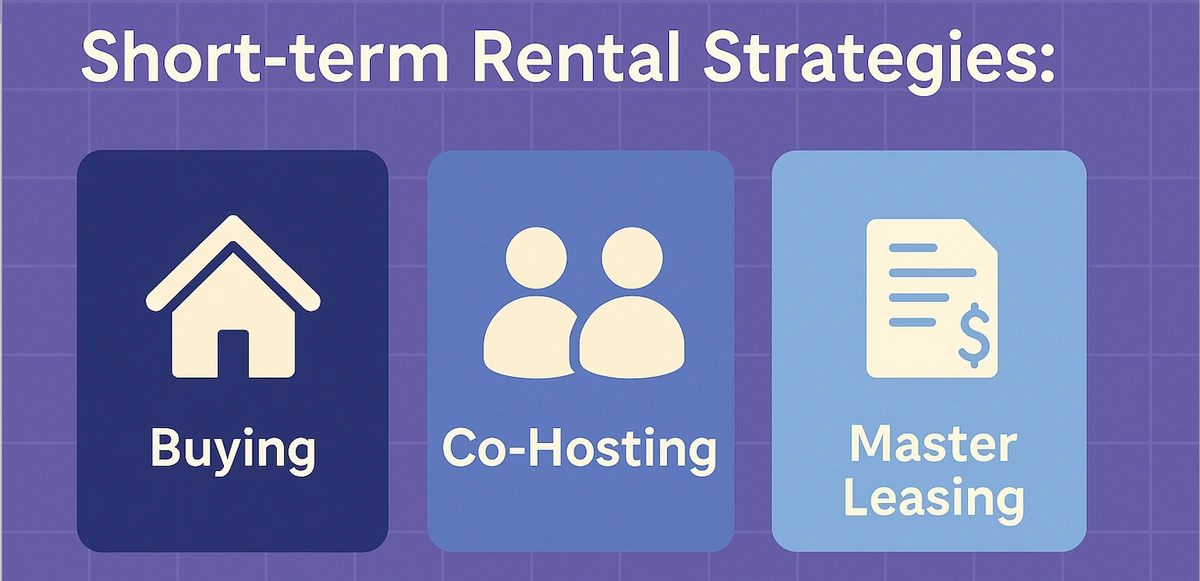
Whether you are launching your first short-term rental or scaling your vacation rental business, choosing the right strategy matters. The three most popular models today are:
-
Buying a property
-
Co-hosting someone else’s property
-
Master leasing from a landlord and subleasing
Each strategy can generate income but not all are created equal. Let’s break down the pros and cons so you can choose what fits your goals.
Buying: Maximum Control and Long-Term Wealth
Buying your own short-term rental is the strongest long-term strategy. While it requires capital upfront, it offers the best mix of control, tax advantages, equity growth, and profit potential.
Pros:
-
Build equity as property values appreciate
-
Full control over renovations, guest experience, and pricing
-
Maximize profit margins per booking
-
Take advantage of STR-specific tools like Rabbu to forecast revenue and identify top markets
-
Tax benefits including depreciation and possible cost segregation
-
Access to STR loan products tailored for investors
Cons:
-
Requires a down payment, furnishing budget, and closing costs
-
Market exposure to seasonality, regulation, and economic shifts
-
Slower to scale without capital
Best For: Investors aiming for long term wealth and operators who treat STRs like a business.
Co-Hosting: Low Barrier, High Learning Opportunity
Co-hosting involves managing another person’s property and earning a percentage of the revenue. It is a great way to get started without needing to buy real estate.
Pros:
-
Little to no upfront cost
-
Learn the ropes of operations, pricing, and guest communication
-
Quick to scale with multiple clients
-
No ownership risk
Cons:
-
No ownership or appreciation upside
-
Limited decision-making authority
-
Earnings are capped as a percentage of revenue
-
Dependent on owner reliability and cooperation
Best For: New entrants who want to gain STR experience with minimal financial risk.
Master Leasing: High Risk with Hidden Costs
Master leasing means renting a property long-term and subletting it nightly on Airbnb. While it offers faster growth potential, the financial downside is often underestimated.
Pros:
-
No need to purchase a property
-
Full control of operations, pricing, and guest experience
-
Easier to build a portfolio quickly if landlords cooperate
Cons:
-
No equity or property appreciation
-
Responsible for rent even during slow seasons
-
Legal risk in areas with unclear subleasing rules
-
High upfront sunk costs including furniture, design, and setup — all of which cannot be recouped when the lease ends or is terminated
-
Margin compression from rising rents and operational costs
-
If a landlord sells or ends the lease, your investment in furnishing and branding is lost
Best For: Operators seeking rapid growth who fully understand local laws and are comfortable taking on high operational and financial risk.
Final Thoughts: Why Buying Wins
All three strategies have their place depending on your capital, experience, and risk tolerance. However, buying stands out as the most sustainable and rewarding model for building a short-term rental empire. It unlocks ownership benefits, tax advantages, and the ability to truly scale your business with control and confidence.
Co-hosting can be a smart on-ramp for learning the business without major risk. Master leasing might look appealing on paper, but the lack of ownership combined with sunk setup costs makes it the least favorable long-term.
Want to buy smarter?
Use Rabbu’s free Market Data Tool to explore high-performing STR markets and forecast revenue before making a purchase.