News of Sonder’s collapse has generated a wave of concern among real estate investors and guests who love short-term rentals. With headlines framing it as a sign that the short-term rental industry is struggling it is easy to draw the wrong conclusions.
As someone who has been deeply involved in the STR space for many years, and as the CEO of Rabbu, I want to bring clarity instead of panic. I have long been cautious about the arbitrage model that powered Sonder’s growth, but I want to be very clear about something.
We should not celebrate this outcome. Sonder did a lot of things right. They built a world class hospitality and operations team and they set high standards for what a modern travel experience could look like. I genuinely hope all employees, guests, and the building owners/developers impacted by this situation land on their feet quickly.
Their collapse is not a commentary on the short term rental industry. It is a reflection of a business model that was fragile from the very beginning.
Let us walk through what actually happened and why the STR space remains incredibly healthy.
The Two Main Reasons Sonder Failed
Reason One - The Arbitrage Business Model
Sonder followed a strategy that looked very similar to what led to the collapse of WeWork. They signed long term leases for entire buildings, furnished them at scale, and then rented them as short-term stays. The idea was simple. Their revenue would offset the enormous lease liabilities, operational costs, housekeeping expenses, furnishing costs and more.
The problem is that this model is extremely liability heavy.
Monthly lease payments are fixed but revenue is variable. This creates razor thin margins that cannot withstand even mild softness in the market. If revenue dips, occupancy shifts or economic conditions tighten the model collapses under its own weight.
Because Sonder did not own the underlying real estate they also had none of the upside protection or tax advantages that STR owners enjoy. There is no equity gain, no appreciation, no bonus depreciation, and no meaningful risk control. When you combine huge liabilities with no asset ownership and marginal unit economics, you get fragility not resilience.
Many arbitrage companies have folded for this exact reason. The model is simply not built for long term stability.
Reason Two - Competing Directly with Hotels
While Sonder units were more spacious than standard hotel rooms and included full kitchens, the company still relied heavily on one and two bedroom units. That put them in direct competition with the hotel industry which has massive supply scale, pricing power, loyalty programs, and long established guest habits.
Sonder was not offering the kind of differentiated inventory that performs best in the STR space, such as large, unique multi-bedroom homes that attract families, groups or high-value leisure travelers. They were fighting on the hotel battlefield where the competition is intense and margins are small.
The Short Term Rental Market Remains Incredibly Healthy
Sonder’s collapse is not an indicator of declining demand for short-term rentals.
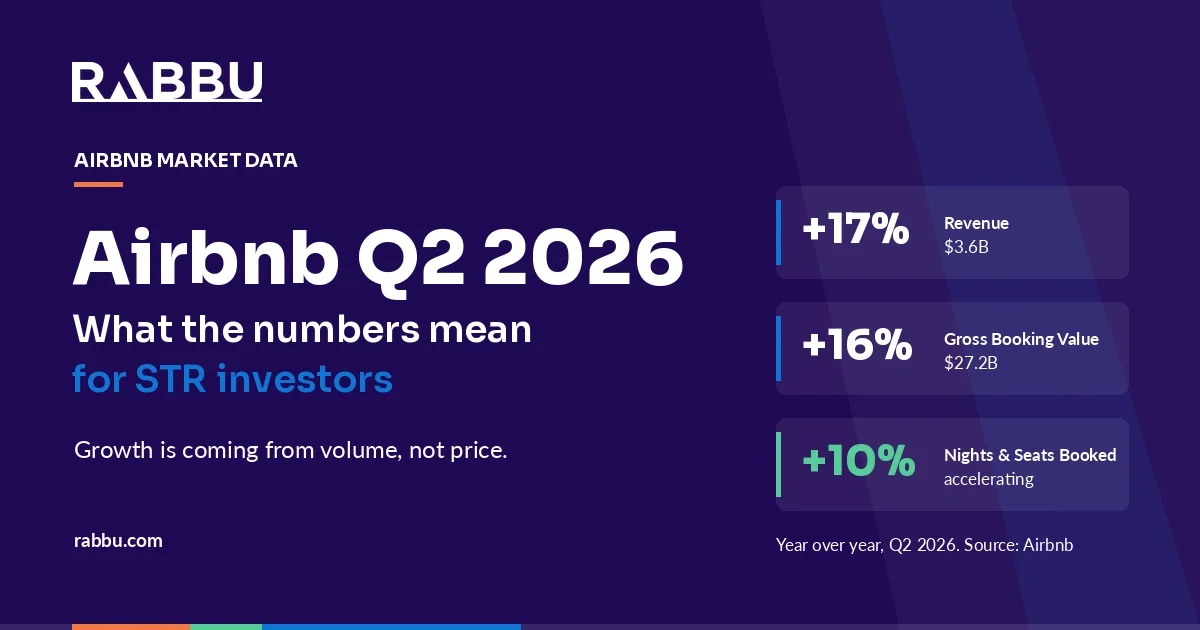
Take Airbnb’s latest earnings report. The company reported double digit growth in nights booked year-over-year, showing that guest demand is not only stable but accelerating. Travelers still overwhelmingly want the comfort, space, uniqueness, and value that STRs provide.
The entire STR category continues to grow because it solves real traveler needs that hotels cannot fully address.
Families want kitchens. Remote workers want space. Groups want gathering areas. Couples want a unique experience instead of a generic room.
That demand is not going anywhere.
Why Now Is Actually a Great Time To Buy an STR
This may surprise some people but with demand rising and incentives growing stronger, this moment is becoming one of the most attractive windows in recent years for STR investors.
Here is why.
Continued Demand Growth
Airbnb’s earnings show that guests continue to choose short-term rentals at scale, creating strong occupancy potential for well positioned properties.
Incredible Tax Savings Through Bonus Depreciation
Current tax rules allow STR owners to benefit from powerful depreciation strategies, including bonus depreciation, which can dramatically reduce taxable income in the early years of ownership.
These tax advantages do not apply to arbitrage companies but they absolutely apply to individual STR investors.
Tools Like Rabbu Make Finding and Buying Easier Than Ever
Between Rabbu’s marketplace and partner ecosystem, including lenders and agents, investors can evaluate and purchase properties with confidence.
Never before has there been this level of data transparency for STR buyers. The arbitrage model is fading but true ownership is stronger than ever.
Final Thoughts
Sonder’s situation is unfortunate, but it is not a warning sign about the future of short-term rentals. It is a cautionary tale about choosing the wrong business model, and competing in the most demanding segment of hospitality, without the protection and upside of owning the asset.
Short-term rentals as an industry remain deeply healthy and continue to grow. Travel demand is strong. Families and groups still overwhelmingly prefer STRs. Owners enjoy significant tax advantages. And with the right tools it has never been easier to buy the right property.
If you want to take advantage of this moment and find your next high performing STR use Rabbu today to discover analyze and purchase your next property with confidence.